The Weight of Wild Hearts.
I wonder now, what was so terrible about a child who wanted to help save the mustangs?
I remember when I was a kid I became very passionate about the issue of wild horses out west being rounded up for cruel uses. I was going through a phase of reading every Marguerite Henry book I could find, and felt inspired to try and support this cause however I could. I did some research and found an animal welfare organization that I wanted to donate some of my money to.
However, I quickly discovered this wasn't an acceptable cause to care about in a deeply fundamentalist Christian world. My passion turned to shame upon being told that I should be more worried about saving people's souls, lest I turn into one of those crazy "tree-huggers."
Later, after doing a stint in political activism as a teenager, I spent most of my early adulthood being fairly agnostic and disengaged from the problems of the world at large. In the last few years I've worked through my complicated feelings around religion and been able to start exploring spirituality from a more expansive perspective. And I am beginning to realize that once you begin to feel the interconnectedness of all things, it is hard to be apathetic about the state of the world.
And yet, there's a constant pull towards indifference. There are so many reasons to turn away, to utter some platitudes, to assume neutrality as an evolved superiority, to give a thousand excuses for why none of it matters. We live in a system that tries to batter, shame, and wring out every drop of passion. To exhaust a heart that beats in rhythm with the universe. It's a system that ingrains and enforces the fear of being too much, of caring too much.
Why? For what end? What is so bad about caring for the world?
I wonder now, what was so terrible about a child who wanted to help save the mustangs?
For if we care enough, we might actually do something. And doing something might threaten the system of control that has been constructed around us. To care is to act. And to act is to disrupt.
Then what will happen to all the people benefiting from the current system?
So the caring must be quelled. The bleeding heart left to bleed out on the altar of exploitation.
Not only are we living within a construct that depends on our apathy, there is a deep internal cost that comes with caring. If we do somehow make it through the churning machine, the path ahead is not easy.
This blog post was indirectly inspired by a moment recently when I was watching a video about the plight of American cattle farmers struggling to survive in the agricultural-industrial complex. While one might assume that farmers today are benefiting from the rising food prices, this is certainly not the case. They are struggling just as much as consumers. So when the video began telling the stories of individual farmers who have been impacted by the corporatization of agriculture, it became emotionally heavy. After one farmer spoke about having to sell his multigenerational farm and almost committing suicide, I had to stop watching the video.
It is hard to feel this much grief for the suffering of the world, and to know it is impossible to hold or heal it all.
Since I'm reading The Odyssey, I think of choosing between the Scylla of apathy and the Charybdis of overwhelming grief. Shall we sacrifice our ethics or our sanity? Could there be a middle way? A way to bear witness to the suffering of all beings, while not losing the light?
One of our losses in the modern world is a container for holding collective grief. We are increasingly aware of the vast injustices and tragedies of the world, without collective practices to do anything with what we're feeling. We're each left adrift in the sea of loss alone, to grapple with the enormity of suffering, and to build our own tiny stories in a feeble attempt of sense-making.
This topic is beautifully explored in The Emerald podcast episode: "Carry That Weight: On Mythic Burdens and Cosmic Supports". Because our web of relationships and interconnectedness has been fractured by modernity, it feels like we each hold the weight of the world alone. As Joshua Schrei comments in the podcast episode:
"Traditional cultures, by contrast, tend to be constructed around networks of support — not only in their sociocultural and spiritual systems, but in their understanding of a cosmological and ecological mandala of animate forces, gods and goddesses and spirit helpers that literally bear weight."
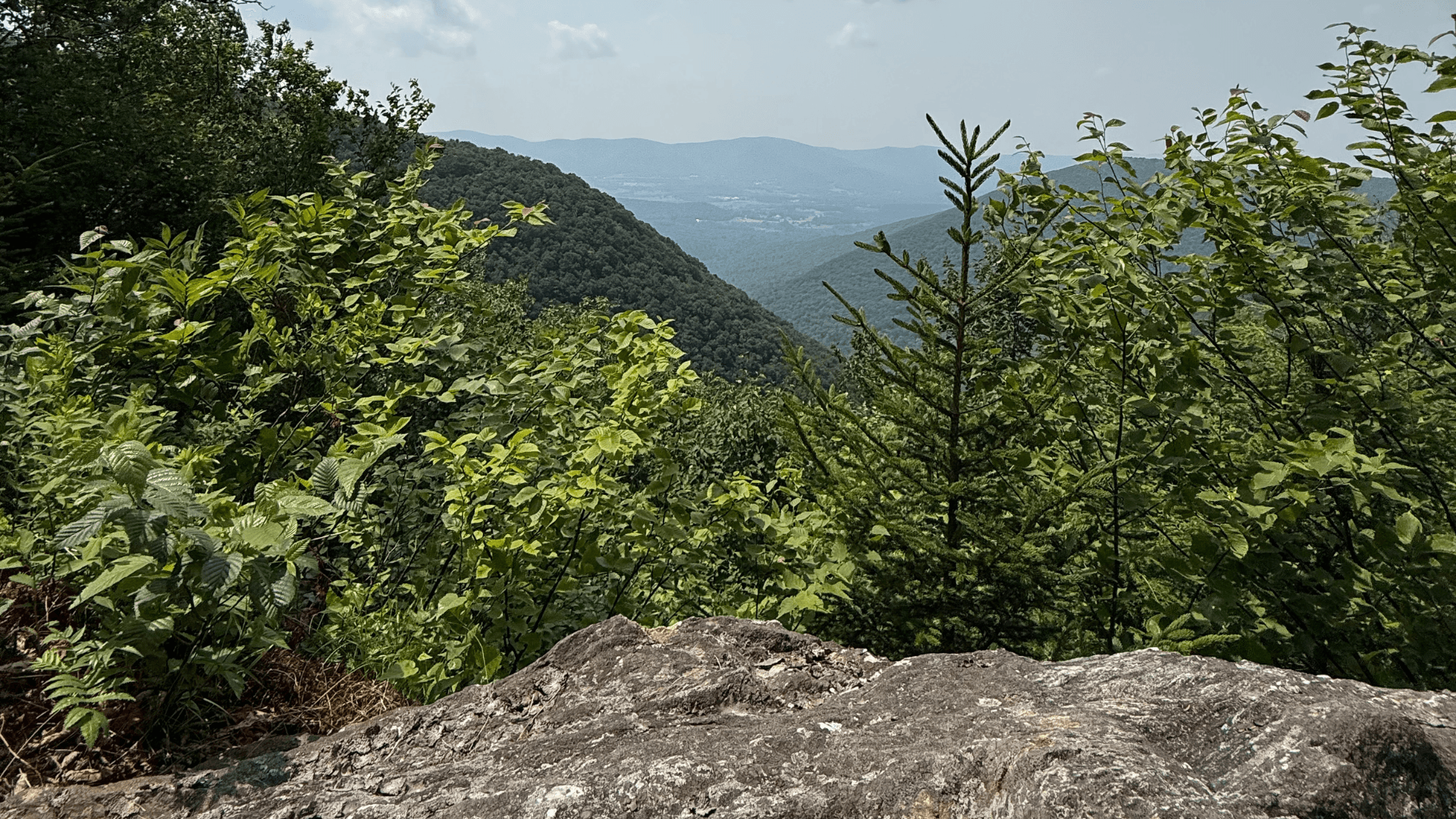
This summer I was up in Massachusetts and had the opportunity to hike Mount Greylock, the highest point in the state. Mount Greylock is part of the same Appalachian mountain range that is becoming my home in East Tennessee. After an arduous hike to a lookout point, I sprawled out on a boulder perched on the edge of the mountain. There was a cool wind, but the sun warmed the rock, and lizard-like, I was basking in the heat. My hands outstretched, feeling rough lichen on stone. After some time I began to feel the mountain holding me. To sink into the ancient solidity of this mountain that has existed through so many eras and epochs of history.
It is here.
Amidst the turmoil and distress, the suffering and sorrow, the devastation and loss. Within the beauty and love, the peace and joy, the life and light.
The earth is here. Holding me. Holding all of us. Together.
It seems appropriate to include this poem to honor Wendell Berry and the light that he brought into the world.
The Peace of Wild Things
Wendell Berry
When despair for the world grows in me
and I wake in the night at the least sound
in fear of what my life and my children’s lives may be,
I go and lie down where the wood drake
rests in his beauty on the water, and the great heron feeds.
I come into the peace of wild things
who do not tax their lives with forethought
of grief. I come into the presence of still water.
And I feel above me the day-blind stars
waiting with their light. For a time
I rest in the grace of the world, and am free.